
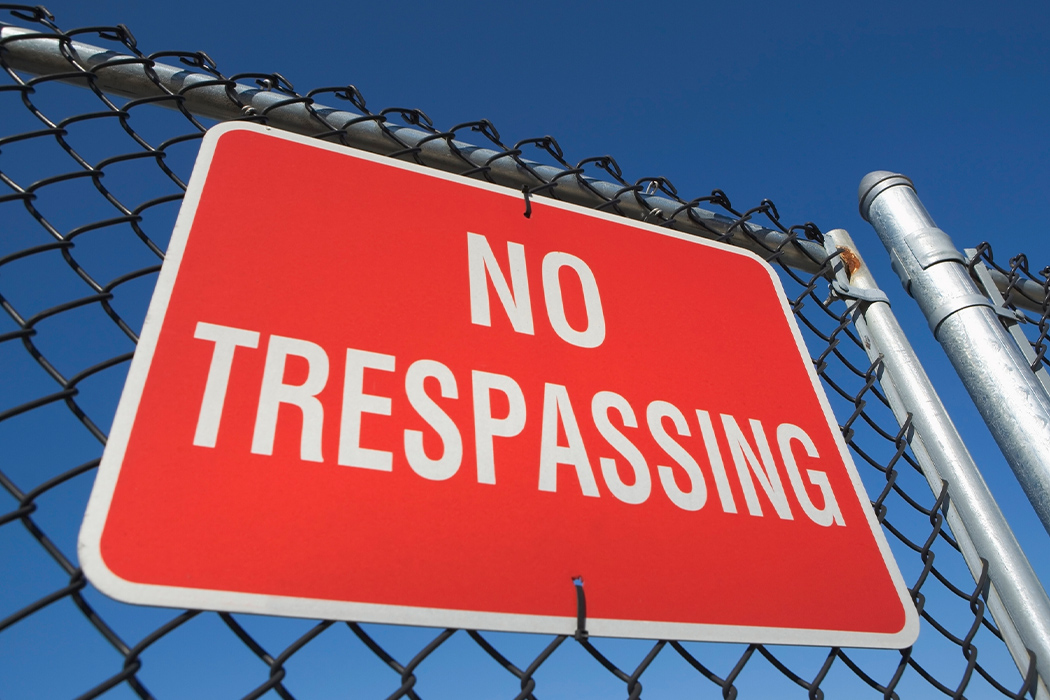
Criminal Trespass in Indiana: Charges, Penalties, and Defenses
A disagreement at a store, an argument over access to a home, or returning to property after being told to stay away can lead to a criminal trespass charge in Indiana.
You do not have to steal anything or damage property to be charged with trespass. The allegation may concern entering a place without permission, refusing to leave, or interfering with someone else’s use of property.
But being on someone else’s property does not automatically establish a crime. The State must prove the requirements of the particular part of Indiana’s trespass statute that applies.
What Is Criminal Trespass in Indiana?
Indiana Code 35-43-2-2 identifies several forms of criminal trespass.
Two common allegations involve a person who, without a contractual interest in the property, knowingly or intentionally:
- Enters another person’s real property after being denied entry; or
- Refuses to leave another person’s real property after being asked to leave.
The denial or request may come from the owner, an authorized agent, or a law enforcement officer acting on their behalf.
The statute also covers other conduct, including certain unauthorized entries into a dwelling, interference with another person’s possession or use of property, and entry into locked areas without permission.
The exact subsection matters. A defense that addresses one type of trespass may not answer a different allegation.
Do Police Have to Give You a Warning First?
Not necessarily.
For an allegation of entering after being denied entry, Indiana law recognizes several ways to communicate that denial, including:
- An oral or written statement;
- A notice posted at the main entrance in the manner required by the statute;
- Certain court or hearing-authority orders; and
- Purple markings on trees or posts that meet statutory requirements.
A property owner’s qualifying warning may be sufficient. Police do not always have to issue a separate warning before making an arrest.
Other types of trespass do not depend on a prior instruction to stay away. For example, knowingly or intentionally entering another person’s dwelling without consent and without a contractual interest can fall under a separate provision.
The question is not simply, “Did an officer warn me?” It is, “What does the charged subsection require, and what evidence supports it?”
Can You Be Charged With Trespassing at a Store Open to the Public?
Yes. A business being open to customers does not mean everyone has unlimited permission to remain there.
A customer who is asked to leave by an authorized person and knowingly refuses may face a trespass allegation. Returning after a qualifying denial of entry can also create a problem.
Disputed details can matter:
- Who gave the instruction?
- Did that person have authority?
- What property did the instruction cover?
- Was the instruction communicated clearly?
- Was the person actually refusing to leave, or already attempting to leave?
Surveillance footage, witness accounts, and body-camera recordings may help establish what happened.
What if You Live at the Property or Have a Lease?
Several trespass provisions expressly require that the accused person lack a contractual interest in the property.
A valid lease or another enforceable right to possess or access the property can therefore be important. A landlord-tenant dispute should not automatically be treated as though the tenant were a stranger with no right to be there.
However, the answer depends on the particular charge, the agreement, and any relevant court orders. Having lived somewhere previously, keeping belongings there, or receiving mail there does not automatically resolve the issue.
An attorney may need to review:
- The lease or other agreement;
- Communications about permission to enter;
- Eviction or possession orders;
- Who had authority over the premises; and
- Any separate protective or no-contact orders.
Do not return to disputed property simply because you believe you have a right to enter. Address the issue through counsel and the appropriate court process.
Is Criminal Trespass a Misdemeanor or a Felony?
Criminal trespass is generally a Class A misdemeanor, carrying up to:
- One year in jail; and
- A $5,000 fine.
Certain circumstances can make it a Level 6 felony, including an offense committed on school property, on a school bus, at certain scientific research or public-utility facilities, or when the person has a prior unrelated trespass conviction concerning the same property.
The statute also contains specific felony provisions involving damage at agricultural operations and scientific research facilities.
These enhancements are not interchangeable. A prior warning is not the same thing as a prior conviction, and a prior trespass conviction involving different property does not automatically satisfy the same-property enhancement.
How Is Trespass Different From Burglary?
Trespass does not necessarily require breaking into a building or intending to commit another crime.
Under Indiana’s burglary statute, the State must establish breaking and entering another person’s building or structure with the intent to commit a felony or theft inside.
Indiana also recognizes residential entry, which involves knowingly or intentionally breaking and entering another person’s dwelling.
These offenses have different elements. A dispute about permission, entry, or intent can affect which charge—if any—the evidence supports.
What Defenses May Apply to a Trespass Charge?
Depending on the allegations, a defense may involve:
- Permission from someone authorized to grant access;
- A contractual interest relevant to the charged subsection;
- Insufficient proof of a qualifying denial of entry or request to leave;
- Evidence that the person did not knowingly or intentionally engage in the prohibited conduct;
- Mistaken identification; or
- Insufficient proof of a felony enhancement.
Preserve texts, leases, photographs, and witness information. Avoid contacting the property owner to argue about the case, especially if a court order restricts contact.
Charged With Criminal Trespass in Indiana?
A trespass case can affect your record even when no one was injured and nothing was stolen. The defense begins with identifying the precise allegation and examining the evidence of permission, notice, and property rights.
Contact Mo AlMahareeq Law for a free 15-minute phone consultation about a criminal trespass charge in Indianapolis or elsewhere in Indiana.
Legal sources: Indiana Code 35-43-2; Indiana Code 35-50-3.
This article provides general information, not legal advice for a particular case.

Written by
Moawia K. AlMahareeq