
Can You Get an OWI While Sleeping in Your Car in Indiana?
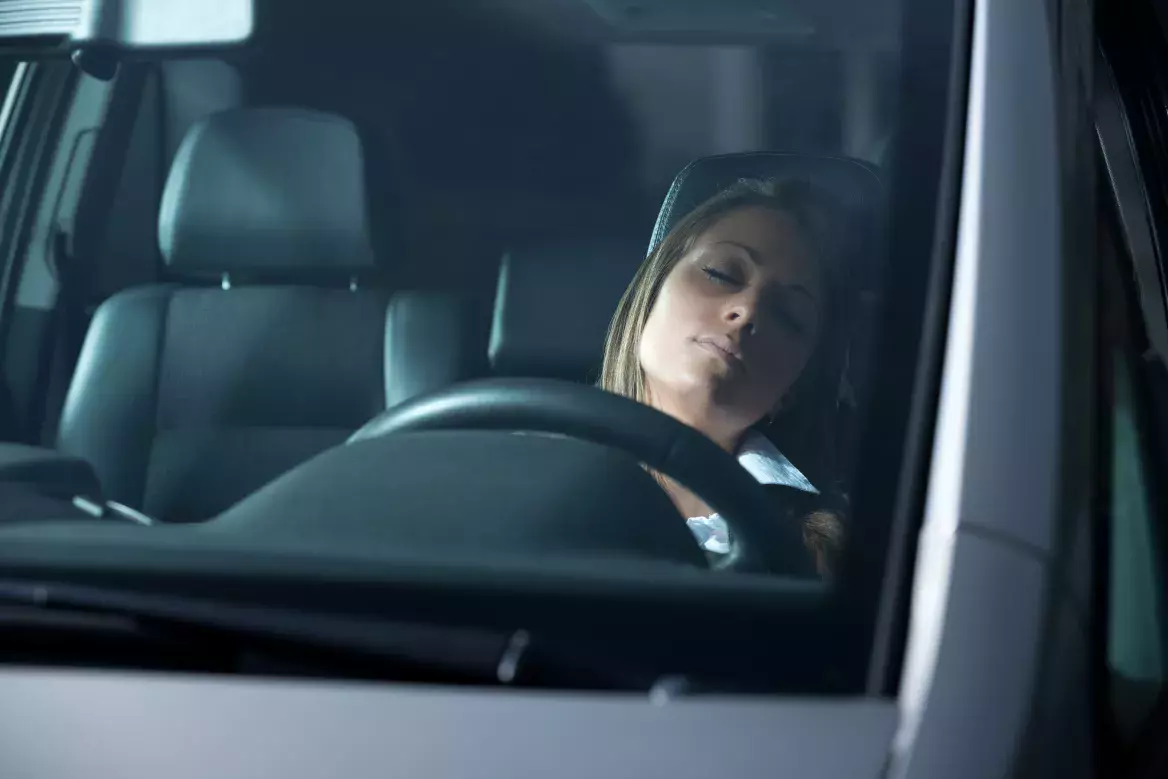
You decide not to drive after drinking. Instead, you return to your parked car and fall asleep. An officer approaches, wakes you up, and begins investigating you for operating while intoxicated.
Can you face an OWI charge even though the officer never saw you driving?
Yes—but being intoxicated and asleep inside a vehicle does not automatically establish an OWI. The State must prove that you operated the vehicle while intoxicated. Whether it can do that depends on the circumstances.
What Does “Operating” a Vehicle Mean?
Indiana Code § 9-13-2-117.5 defines “operate” to include navigating or otherwise being in actual physical control of a vehicle.
That makes the question broader than whether an officer personally watched you drive down the road. Prosecutors may use circumstantial evidence to argue that you operated the vehicle before police arrived.
However, finding an intoxicated person inside a parked car does not eliminate the need to prove operation. The State must connect the evidence of intoxication to the alleged operation of the vehicle.
What Facts Do Courts Consider?
Indiana appellate decisions identify several relevant circumstances, including:
- Where officers found the vehicle.
- Whether it was moving.
- Whether anyone observed earlier operation.
- Whether the transmission was in park, drive, or another position.
- Other evidence supporting a reasonable inference that the person operated it.
The person’s statements, witness accounts, and the vehicle’s position may all affect the analysis.
For example, a vehicle stopped in a travel lane presents different circumstances from one properly parked outside a business where the person had been drinking. Neither location answers every question by itself.
Is a Running Engine Enough?
A running engine is relevant, but it does not automatically prove an OWI.
In Hiegel v. State, officers found the defendant asleep in a vehicle parked outside a tavern. The engine, lights, and heater were on, and the transmission was in park. The Indiana Court of Appeals concluded that the evidence was insufficient to establish that he operated the vehicle while intoxicated.
The court explained that merely showing the defendant started the engine was insufficient under the circumstances presented.
That does not create a blanket rule that a person can never be convicted if the vehicle is parked. Other evidence may support a different result.
How Can Someone Be Convicted Without Being Seen Driving?
A more recent example is Skidmore v. State, a 2024 Indiana Court of Appeals memorandum decision.
Officers found Skidmore slumped over in a running truck outside a liquor store. The truck was positioned perpendicular to designated parking spaces and blocked several spaces. He also had his seatbelt secured.
The court concluded that the surrounding circumstances supported an inference that he had driven to that location while impaired. It affirmed the conviction.
Skidmore is a memorandum decision rather than binding precedent, but it illustrates an important distinction: the prosecution may prove operation through surrounding circumstances even when nobody saw the vehicle moving.
Does Sleeping in the Passenger Seat Prevent a Charge?
Where you were sitting can matter, but no particular seat guarantees that an OWI investigation will end.
The prosecution may contend that you drove earlier and moved before officers arrived. Conversely, evidence that someone else drove, or that you became intoxicated only after parking, may be important to the defense.
The issue is not simply where officers found you. It is whether the State can prove operation while intoxicated beyond a reasonable doubt.
What Evidence Should a Defense Attorney Review?
A careful review may include:
- Body-camera and dash-camera footage.
- Dispatch records and the timing of the officer’s arrival.
- Witness accounts and available surveillance footage.
- The vehicle’s location and transmission position.
- Statements attributed to the accused.
- Alcohol or drug testing and the timeline surrounding it.
These details can help distinguish evidence of intoxication from evidence of operating while intoxicated.
The Bottom Line
Choosing not to drive while impaired is important. But sleeping in a car does not provide automatic immunity from an OWI charge, particularly when evidence suggests earlier impaired driving.
The safest plan is to arrange a sober ride and a safe place to stay rather than rely on a parked vehicle. If you have already been charged, an attorney can evaluate whether the State can actually prove operation—not merely that you were intoxicated when police found you.
Mo AlMahareeq Law offers free 15-minute phone consultations to discuss Indiana OWI charges and possible defenses.
Schedule a free consultation by phone.
Sources
- Skidmore v. State (2024), discussing Indiana’s statutory definition and the Hiegel decision.
- Indiana Code, Title 9, Article 13, Chapter 2.
This article provides general information, not legal advice. The outcome of a particular case depends on its facts and applicable law.

Written by
Moawia K. AlMahareeq