
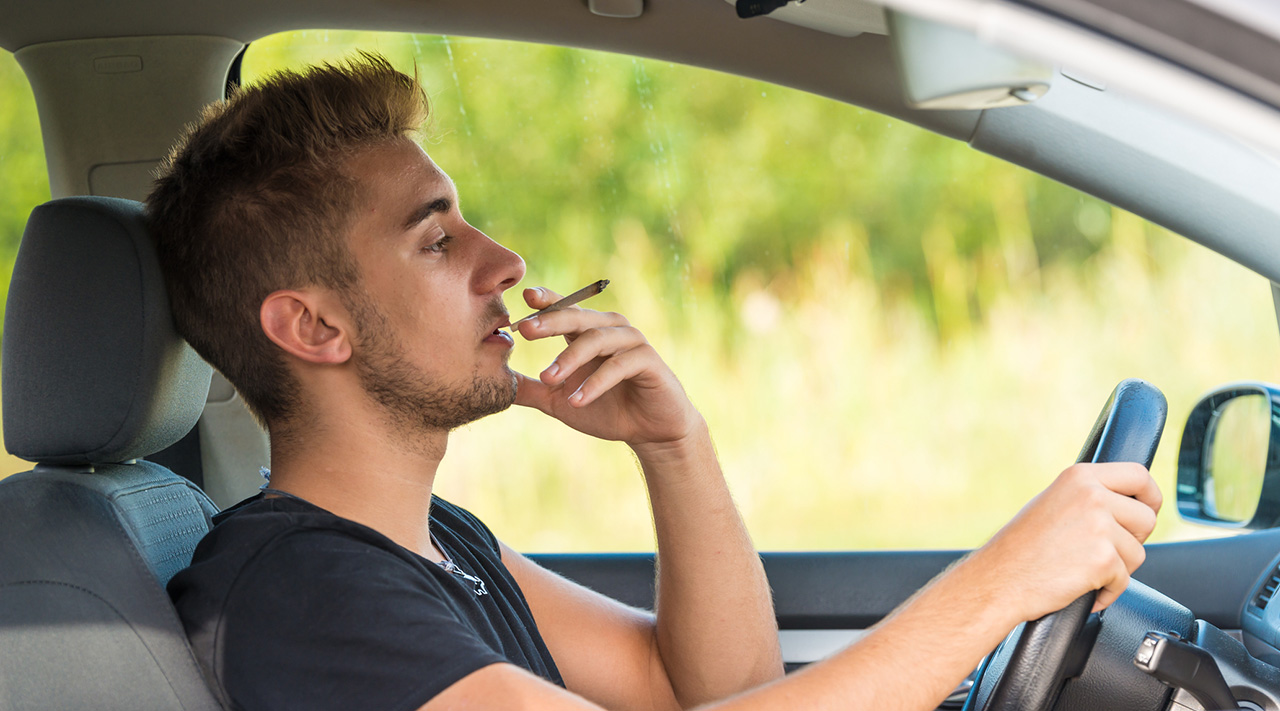
Have you been charged with a marijuana OWI or marijuana DUI in Indiana? Indiana has been slower than other states in regard to the legalization of marijuana, and driving under the influence of a controlled substance, including forms of cannabis/marijuana and CBD that contain .3% or more of THC, is a serious charge. Even though the first offense of a DUI for weed may just be a misdemeanor, it can still involve time in jail, many hours of community service, court fees and fines, and suspension of driving privileges. For more on the legal issues discussed here, see our DUI and OWI defense overview and What is the Difference Between Certified Chemical Tests and PBTs in Indiana DUI Cases? guide.
Indiana DUI & OWI Involving Marijuana Laws
The use of marijuana can impair your coordination, judgment, reaction time, and ability to concentrate - all abilities needed to safely operate a vehicle. And while it is clear that marijuana can cause impairment - Indiana drinking and driving laws do not universally apply to driving high or operating a vehicle while impaired by marijuana or a metabolite of marijuana.
In 2021, Indiana legislature introduced a defense for people charged with driving under the influence of a controlled substance or its metabolite in their blood. Although weed is not legal in Indiana, the defense applies specifically to those charged with operating a vehicle with marijuana or a metabolite of marijuana in their system.
Not every accident requires chemical testing of every driver. Under Indiana Code 9-30-5-1(d)(2), the marijuana defense to the per se charge requires that the substance be marijuana or its metabolite, the person was not intoxicated, the person did not cause a traffic accident, and the substance was identified by a chemical test taken under IC 9-30-7. That last requirement is specific; it does not mean any test taken under any Indiana law. A positive result alone does not establish current impairment.
- The test is administered following an accident that was not their fault
- The person tested positive for any amount of THC in his or her system (there is no lawful DUI THC level)
- They did not show signs of impairment.
If the conditions are met, the individual may have a valid defense to the charge of operating a vehicle with marijuana in their bloodstream.
How Do Police Test for Marijuana DUI Impairment?
When you smoke pot, the chemical component of weed - tetrahydrocannabinol (THC) will be in your blood and saliva. THC can remain in your blood for days and even weeks after smoking, long after you are impaired. Although there is no established consensus on what amount or concentration of THC causes impairment, there are a couple of ways police test for marijuana impairment.
SoToxa Oral Fluid Test
In December 2020, Law enforcement officers across the state of Indiana began using a new tool - the SoToxa Oral Fluid Test. This fluid test is used to test drug-impaired drivers for six kinds of drugs:
- Cannabis (THC)
- Amphetamine
- Benzodiazepines
- Cocaine
- Methamphetamine
- Opiates.
In order to use the SoToxa Oral Fluid Test, officers must complete a training regimen that includes classroom training, a written assessment, and the psychomotor skill of collecting an oral fluid sample before using the test in the field. In order to use it, law enforcement must have both a reason to stop a motorist and suspect impairment. Officers must be trained by other law enforcement officers who are standardized field sobriety test instructions and have also completed Drug Recognition Expert (DRE) or Advance Roadside Impaired Driving Enforcement (ARIDE) training. The SoToxa test may be offered after a valid traffic stop is made and the officers suspects impairment after using standard detection techniques including standardized field sobriety tests.
Indiana drivers can refuse the SoToxa test. While the test can be used to establish probable cause to offer a blood draw chemical test, the results of the SoToxa test cannot be used in court as evidence of impairment. The SoToxa test can be confusing because people do not understand their rights and may not be fully understanding of marijuana DUI laws even when police are explaining them. Refusal to take a chemical test has consequences (driving privileges are suspended for one year on first refusal and two years for subsequent refusals) and can be admissible at trial. As of 2022, the SoToxa test is not considered a chemical test under Indiana Law.
If the law enforcement officer believes that they have probable cause to believe you were operating with marijuana or a metabolite of marijuana in your system, then they will likely offer you the opportunity to complete a blood draw chemical test. The officer must follow Indiana Implied Consent law before administration of the test. Indiana's implied consent law means if you operate a vehicle, you impliedly consent to chemical tests (Indiana Code § 9-30-6-1). If you do not submit to a test, it is considered a refusal (Indiana Code § 9-30-6-2(d)).
OWI & DUI Weed Charges and Penalties in Indiana
A marijuana OWI may also be referred to as a DUID (driving under the influence of drugs). You can be charged with a DUI in one of two ways:
- Per se DUID: Evidence of a schedule I or schedule II controlled substance in your system via a chemical test.
- Impairment DUID: The state's evidence is a demonstration of your impairment, which may include the arresting officer's observations, statements made, or evidence collected.
In addition to criminal charges, being charged with marijuana OWI in Indiana may also result in a suspension of your license from the Indiana Bureau of Motor Vehicles.
Lab results may take time, and license consequences need separate review of the test, probable-cause determination, court orders, and BMV record. Under IC 9-30-6-9, a qualifying chemical-test refusal generally carries a one-year suspension, or two years with a previous OWI conviction. Do not assume a drug allegation carries the same administrative suspension as an alcohol test of at least 0.08. Eligibility for specialized driving privileges also requires separate review.
Criminal charges for drugged driving are typically:
- A basic per se controlled-substance or intoxication offense is a Class C misdemeanor, with up to 60 days in jail and a $500 fine. Intoxicated operation that endangers a person is Class A, with up to one year and a $5,000 fine.
- A previous OWI conviction within seven years before the current violation generally supports Level 6. A qualifying previous OWI causing serious bodily injury, catastrophic injury, or death can support Level 5.
The passenger enhancement requires a driver at least 21, a passenger under 18, and a violation of a provision specified in IC 9-30-5-3(a)(2). Causing serious bodily injury is generally Level 5, or Level 4 with a qualifying OWI conviction within five years. Causing death or catastrophic injury is generally Level 4. These are separate statutory requirements, not an automatic felony for every accident.
The consequences of a marijuana DUI may seem overwhelming - but all hope is not lost. There are many situations where a person may have a strong defense based on the actions of law enforcement or qualify for the statutory defense listed above. It is always advisable to speak with a marijuana/cannabis DUI lawyer about your case, your options, and your best course of action.
Cannabis DUIs & OWIs Possible Defenses
Marijuana OWI is different from alcohol DUIs - as you are not accused of having alcohol in your system. There is no breath test available to detect marijuana. Because marijuana can stay in your system much longer than alcohol, the presence of marijuana in your blood does not indicate that you were high. In addition to the statutory defense listed above, there are some potential defenses to a DUI weed charge:
- Police failed to properly administer a cannabis DUI test, also known as the SoToxa Oral Fluid Test
- The results of your marijuana DUI test through a chemical test blood draw were not accurate or the blood draw was not conducted properly under Indiana law.
- Law enforcement did not have a valid reason to conduct a traffic stop under Indiana law
- Law enforcement did not read you the DUI Indiana implied consent law.
If you are charged with OVWI/DUI call Mo today at (347) 889-4944 or schedule a free consultation. Mo will closely analyze the circumstances of your case to determine the best defense available.

Written by
Moawia K. AlMahareeq