
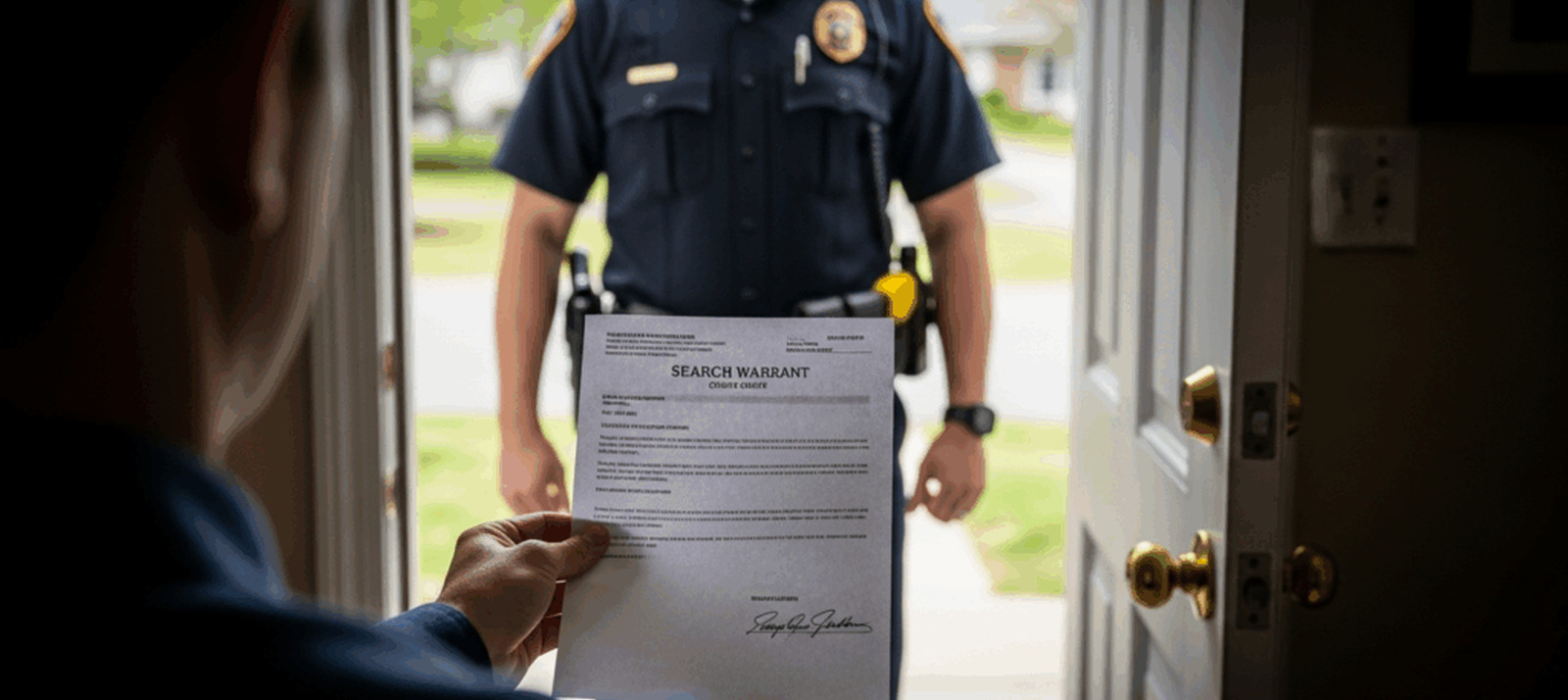
How Does a Police Officer in Indiana Get a Search Warrant?
Most people have heard the term "search warrant," but few understand what it actually takes for police to obtain one. This post breaks down the legal requirements and process — knowledge that matters both to law enforcement and to anyone facing a criminal investigation. For more on the legal issues discussed here, see our Indiana criminal defense overview and What Does an Officer Need to Search My Car? guide.
__Probable Cause Is the Foundation__
Under Indiana law, a court may issue a search warrant only upon probable cause, supported by oath or affirmation. This means the officer requesting the warrant must swear, under penalty of perjury, that the information provided is true. That information can be presented to a judge in writing, orally, or even by phone — but regardless of format, it must establish probable cause, and it must also disclose any facts that could weigh against it. The judge reviewing the request must remain neutral and detached, making an independent determination that probable cause actually exists.
__The Nexus Requirement__
A valid search warrant requires more than suspicion — there must be a clear connection, or "nexus," between the crime under investigation and the specific location to be searched. A hunch isn't enough.
Indiana courts have made this requirement concrete. In one case, a confidential informant told police he'd purchased drugs once from a person inside a public barbershop. Officers obtained a warrant to search the barbershop, but the Indiana Court of Appeals later struck it down. Why? The affidavit gave no reason to believe drugs were being sold or stored there — the seller simply happened to be present. Without that connection, the warrant didn't hold up.
__Corroborating Information from Informants__
When officers rely on information from another person, they must independently corroborate it — and that corroboration has to go beyond facts anyone could easily verify, like a car's make, model, or license plate. If the source is an identifiable informant, the officer must also establish that person's credibility, often by noting a track record of providing accurate information in the past.
__Other Requirements__
Beyond probable cause and nexus, the warrant affidavit must particularly describe the place to be searched and the items sought. The officer must also allege that a specific crime was committed and provide good cause to believe evidence of that crime will be found at the location.
__Execution and Aftermath__
Once a judge approves a warrant, officers generally have ten days to execute it. Afterward, they must file a "return" with the court listing everything seized. That evidence is typically retained for the duration of any resulting criminal case.
__Why This Matters__
Search warrants — especially those targeting smartphones — can yield enormous amounts of personal information, from communications and location data to photos. Given how much is at stake, it's critical to have an attorney review whether a warrant in your case was properly obtained and executed. Errors or shortcuts by police can determine whether evidence is admissible — or suppressed.
__Contact Mo Today__
If you've been served with a search warrant, contact Mo to protect your rights. He's available 24/7/365 at (347) 889-4944 or mo@moalmahareeqlaw.com.

Written by
Moawia K. AlMahareeq