
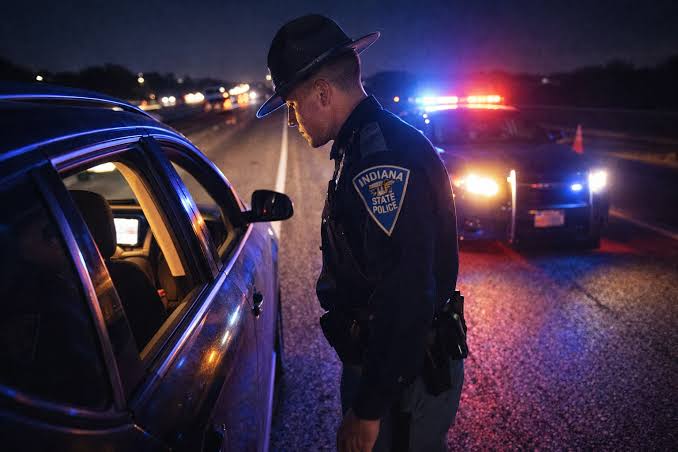
The car gets towed. You make the calls you have to make. And then, sometime in the quiet that follows, the real question sets in: what happens now? For more on the legal issues discussed here, see our DUI and OWI defense overview and What is the Difference Between Certified Chemical Tests and PBTs in Indiana DUI Cases? guide.
If you or someone you love has been arrested for drunk driving in Indiana, those first hours can be disorienting. The questions come faster than the answers — and most of what you'll find online is either frustratingly vague or written for another state's laws entirely.
Here's what most people don't realize right away: the moment an OWI arrest happens in Indiana, two separate legal clocks start ticking. One governs the criminal case. The other governs a BMV administrative action against your driver's license. They run on different timelines, follow different rules, and each demands its own attention. Focus only on the courtroom and let the BMV deadline slip, and you can lose options that are very difficult to get back.
What Indiana Actually Charges You With After a Drunk Driving Arrest
First, a vocabulary note: Indiana doesn't use the term DUI. The charge here is OWI — Operating While Intoxicated — and the specific version you're facing depends on your blood alcohol concentration (BAC), the circumstances of the stop, and whether any aggravating factors were present.
The baseline charges break down by BAC. A result between 0.08% and 0.14% is a Class C misdemeanor. At 0.15% or higher, the charge escalates to a Class A misdemeanor, and the potential penalties climb meaningfully with it. And here's a detail that surprises many drivers: under IC 9-30-5-2, you can still be charged with a Class C misdemeanor for operating while visibly impaired — even if your BAC comes back below 0.08%. A low number is not automatic protection.
Some circumstances can push the charge higher still — to a Level 6 felony — before the case ever reaches a courtroom. These aggravating factors include:
- A passenger under age 18 in the vehicle at the time of the stop - Causing injury to another person as a result of impaired driving - A prior OWI conviction within seven years of the current offense
Two Legal Battles Start the Moment You're Arrested
Most people arrested for OWI assume they have one problem: the court case. In Indiana, you have two. The criminal case is the one everybody thinks about. But the BMV's administrative suspension starts running on its own clock from the moment of arrest — entirely independent of how the criminal case turns out. You could win in court and still lose your license for longer than necessary because the BMV side was ignored.
Indiana's implied consent law adds another layer. By driving on Indiana roads, you've already agreed — legally, whether you knew it or not — to submit to chemical testing if you're lawfully arrested for OWI. Refuse the test, and an automatic additional suspension kicks in: one year for a first offense, two years for any subsequent one. Worse, refusal disqualifies you from Specialized Driving Privileges during the suspension tied to that refusal. A decision made in a stressful roadside moment can lock you out of the single best tool for keeping your life running.
So, what are Specialized Driving Privileges? SDP is the mechanism Indiana courts use to give a suspended driver limited driving rights — typically to get to work, school, or medical appointments. A petition filed early in the process can stay the court-ordered suspension. But the timing of that filing matters, and it operates on a completely separate track from any plea or trial strategy in the criminal case. This is exactly the kind of parallel deadline that gets missed when someone tries to handle an OWI alone.
Penalties by Charge Level: What the Statute Actually Allows
Indiana OWI penalties are tied directly to the charge level. Here's what the statute authorizes at each tier.
- Class C Misdemeanor (First Offense, BAC 0.08% to 0.14%) Up to 60 days in jail, fines up to $500, and a license suspension of up to 60 days. This is the lowest tier, but it still carries real consequences and creates a criminal record. - Class A Misdemeanor (First Offense, BAC 0.15% and Above) Up to one year in jail, fines up to $5,000, a license suspension of up to one year, and court-ordered participation in substance abuse programs. The jump from Class C to Class A is steep. - Level 6 Felony (Second OWI Within Seven Years or Aggravated Circumstances) A mandatory minimum of five actual days in jail (or 240 hours of community service), up to 2.5 years in the Indiana Department of Corrections, fines up to $10,000, and a minimum one-year license suspension. If the state also files a Habitual Vehicular Substance Offender (HVSO) enhancement, which applies when a driver has two prior substance-related driving offenses with at least one within the last ten years, or three or more prior convictions regardless of timing, up to eight additional years can be added on top of the underlying sentence.
One more development worth knowing: effective January 1, 2026, Indiana judges may impose a no-alcohol-sales restriction on driver's licenses for OWI convictions involving a BAC of 0.16% or higher. Under this restriction, bars, restaurants, and liquor stores are permitted to refuse alcohol sales to the license holder. It's a public-facing consequence that goes well beyond the courtroom.
Consequences That Extend Beyond the Courtroom
The statutory penalties are only part of what an OWI conviction actually costs. Several collateral consequences reach into areas of life that have nothing to do with what happened in a courtroom.
- CDL Disqualification A first OWI conviction triggers a mandatory one-year CDL disqualification, even when the arrest occurred in a personal vehicle. CDL holders are also ineligible for Specialized Driving Privileges during the suspension. Because CDL disqualifications are federally mandated under the Commercial Motor Vehicle Safety Act, Indiana courts have no authority to modify or shorten them. For anyone who drives commercially for a living, this is often the most severe practical consequence of an OWI conviction. - Professional Licensure A felony OWI conviction can expose professional licenses in fields such as healthcare, accounting, and social work to disciplinary review. Licensing boards in these fields require self-reporting of criminal convictions, and the review process is entirely separate from any court proceeding. - Insurance Costs and Background Checks An OWI conviction at any level typically causes substantial auto insurance premium increases and, in some cases, policy cancellation. A felony conviction also appears on background checks in ways that can affect housing applications and employment in positions that require a clean record.
What Defense Actually Looks Like at This Stage
Understanding what you're facing is not the same as accepting it as final. A charge is an accusation, not an outcome. To convict, the state has to prove specific things: that there was probable cause for the traffic stop, that field sobriety tests were properly administered, and that chemical testing followed valid procedures. Every one of those elements can be examined — and where the facts support it, challenged.
A stop made without legal justification. A breath test run on a device that wasn't properly calibrated. Field sobriety instructions that didn't follow standardized protocols. These aren't technicalities. They're load-bearing pieces of the state's case, and when one gives way, the case can break down before any penalty ever applies.
In some cases, a charge reduction to what's often called a "wet reckless" is possible — a reckless driving charge involving alcohol under IC 9-21-8-52. Compared to an OWI conviction, a wet reckless carries significantly lower penalties and avoids the mandatory license consequences an OWI finding triggers. But be clear-eyed about what it is: it's not available in every case, and the state doesn't offer it out of generosity. It's a negotiated outcome, and it depends on what the evidence actually shows and how effectively the defense presents it.
Acting Quickly on Both Tracks Matters
The decisions made in the first hours and days after an OWI arrest carry weight that's genuinely difficult to undo later. The BMV window for protecting driving privileges is short. The court timeline starts moving whether you're ready or not. Being informed on day one rather than day ten is often the difference between having options and running out of them.
Call Mo Today
Mo is available around the clock because that's when these situations happen. If you or someone you care about is dealing with an OWI in Indiana, reach out to Mo at (347) 889-4944. Mo can tell you exactly where things stand and what needs to happen next.

Written by
Moawia K. AlMahareeq